


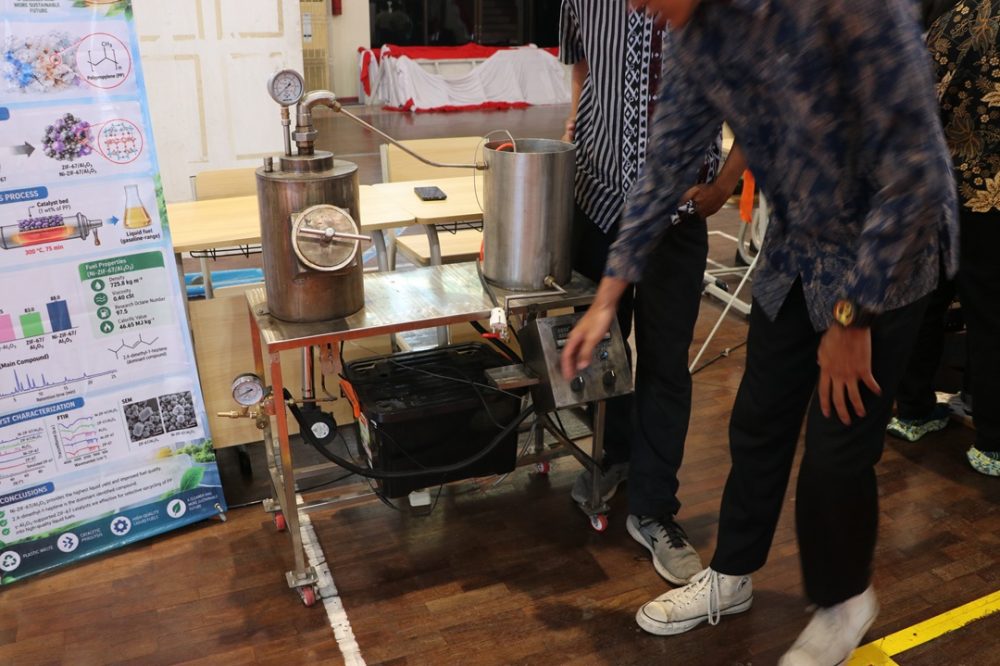
Polije and BRIN Develop Catalyst for Plastic Waste Recycling
JEMBER — Jember State Polytechnic (Polije) and the National Research and Innovation Agency (BRIN) are developing a catalyst for plastic recycling. The research converts polypropylene (PP) waste into high-quality liquid fuel through catalytic pyrolysis.
The research team designed catalysts based on Al₂O₃-supported ZIF-67 and Ni-ZIF-67. Both materials support plastic waste conversion while improving liquid fuel yield and quality.
The catalytic pyrolysis process treats plastic waste at 300 degrees Celsius for 75 minutes. Laboratory tests showed that the Ni-ZIF-67/Al₂O₃ catalyst produced liquid fuel with a yield of up to 88 percent.
Beyond increasing production yield, the catalyst helps convert plastic hydrocarbon chains into fuel compounds. Laboratory analysis recorded a Research Octane Number (RON) of 97.5.
This octane rating indicates the potential quality of the resulting liquid fuel. Researchers also identified 2,4-dimethyl-1-heptene as one of the main compounds in the processed product.
The research offers an alternative approach to managing polypropylene plastic waste. Catalytic pyrolysis also creates opportunities to transform discarded materials into products with economic value.
Furthermore, the collaboration strengthens applied research in alternative energy technology. It also supports upcycling efforts that increase the value and usefulness of plastic waste.
Through this research, Polije and BRIN demonstrate the potential of technology to convert plastic waste into liquid fuel. Further development must consider process efficiency, product quality, and environmental impacts before wider implementation.


