


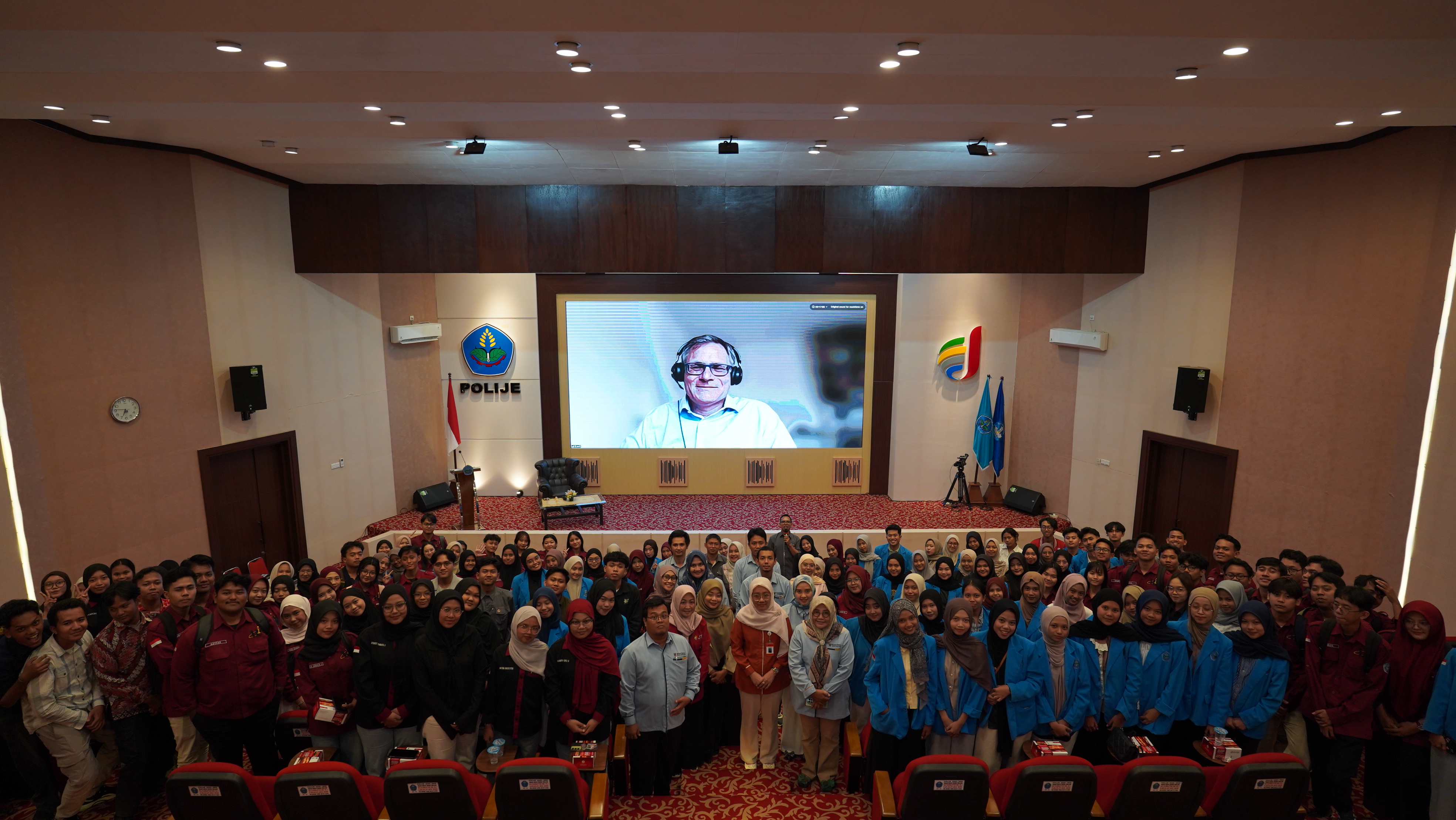
POLIJE Holds Guest Lecture on Swiss Food Safety Requirements for Indonesian Exporters
Politeknik Negeri Jember (POLIJE), through its Office of International Affairs, successfully organized a guest lecture titled “Swiss Food Safety Requirements: What Indonesian Exporters Must Know” on April 15, 2026. The event was held at POLIJE and featured an expert speaker from Switzerland, Prof. Dr. Raymond Place, who shared his extensive knowledge and professional experience in food safety and international standards.
The guest lecture aimed to enhance participants’ understanding of global food safety requirements, particularly those applied in Switzerland as one of the most demanding markets in the world. The session was attended by students, lecturers, and academic staff, especially those from study programs related to food technology, agriculture, and agribusiness.
During the session, Prof. Dr. Raymond Place emphasized the importance of food safety in international trade. He explained that global food supply chains are increasingly complex, requiring strict control systems to ensure product safety, quality, and traceability. He also highlighted that consumer expectations in Switzerland are very high, making compliance a key factor for successful market entry.
The speaker further elaborated on the Swiss food safety system, including key legal frameworks such as the Swiss Foodstuffs Act, Food Hygiene Ordinance, and Food and Utility Articles Ordinance. These regulations establish strict standards for imported food products, including hygiene management, labeling requirements, and the use of approved ingredients.
A key highlight of the guest lecture was the discussion on food safety management systems, particularly the Hazard Analysis and Critical Control Points (HACCP). Participants were introduced to its core principles, including hazard identification, critical control points, monitoring procedures, and corrective actions, which are essential to prevent food safety risks.
In addition, the lecture covered the importance of international certifications such as ISO 22000, IFS Food Standard, and BRC Food Safety Standard. These certifications are widely recognized and often required by international buyers to ensure compliance and product quality.
The session also addressed challenges faced by Indonesian exporters, including differences in regulatory systems, certification costs, complex documentation, and the need for full traceability. Despite these challenges, opportunities for Indonesian products such as coffee, cocoa, spices, and processed foods in the Swiss market remain significant.
Through this guest lecture, POLIJE reaffirmed its commitment to strengthening international academic collaboration and preparing students with global competencies. The knowledge gained from this session is expected to support participants in meeting international standards and enhancing their readiness to compete in global markets.


