


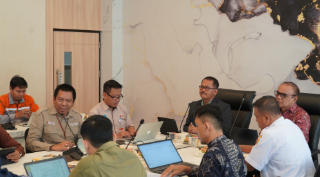
BPKP and Jember Manpower Office Assess POLIJE’s Readiness for Green Jobs Development
A team from the Financial and Development Supervisory Agency (BPKP) and the Jember Regency Manpower Office (Disnaker) visited Politeknik Negeri Jember (POLIJE) to assess the institution's readiness in preparing a skilled workforce for the green economy. The visit forms part of the implementation of the GESIT East Java Program, which aims to strengthen vocational education in supporting the transition toward sustainable industries and environmentally responsible employment.
During the assessment, the evaluation team reviewed POLIJE's curriculum, teaching facilities, industry partnerships, and graduate tracer system to determine how effectively the institution aligns its educational programs with the evolving needs of green industries. Discussions also focused on identifying workforce competencies required to support Indonesia's growing green economy.
John Hery, Technical Controller from BPKP Headquarters, commended POLIJE for its proactive efforts in developing an adaptive vocational curriculum that responds to industrial transformation. He emphasized that the institution's commitment to integrating sustainability into its educational programs represents an important step toward producing competent professionals capable of supporting environmentally sustainable economic development.
Representing the local government, Subagiyo, Secretary of the Jember Regency Manpower Office, reaffirmed the government's commitment to strengthening collaboration with POLIJE. He noted that partnerships between educational institutions and government agencies are essential for improving human resource quality and ensuring graduates possess the competencies required by emerging green industries.
POLIJE Director Saiful Anwar explained that the university continues to enhance students' competencies through practice-oriented learning, supported by modern laboratories, Teaching Factory (TEFA) facilities, and strong collaboration with business and industry partners. According to him, these initiatives ensure that graduates are equipped with practical skills that meet current and future workforce demands, particularly in the green economy sector.
The institution has also intensified curriculum development in collaboration with industrial partners to ensure learning outcomes remain relevant to technological advancements and sustainability trends. Through this industry-driven approach, POLIJE seeks to bridge the gap between vocational education and labor market requirements while preparing graduates for careers in renewable energy, sustainable agriculture, environmental management, and other green sectors.
The evaluation reflects Indonesia's broader commitment to accelerating the transition toward a sustainable economy. As demand for green jobs continues to increase, vocational institutions play a strategic role in developing a workforce with the technical expertise, environmental awareness, and innovation capabilities needed to support national sustainable development goals.
Through the readiness assessment conducted by BPKP and the Jember Manpower Office, POLIJE has demonstrated its strong commitment to becoming a leading vocational institution in green workforce development. By continuously strengthening its curriculum, facilities, industry partnerships, and experiential learning ecosystem, the university is positioning itself to produce graduates who are well prepared to contribute to Indonesia's sustainable economic transformation and the future of green industries.


