


Polije Empowers Curahlele TP PKK Through NutriLab Kitchen Teaching Factory
JEMBER — Politeknik Negeri Jember (Polije), through its Department of Health, is empowering the Family Welfare Empowerment Team (TP PKK) of Curahlele Village, Balung District, Jember Regency.
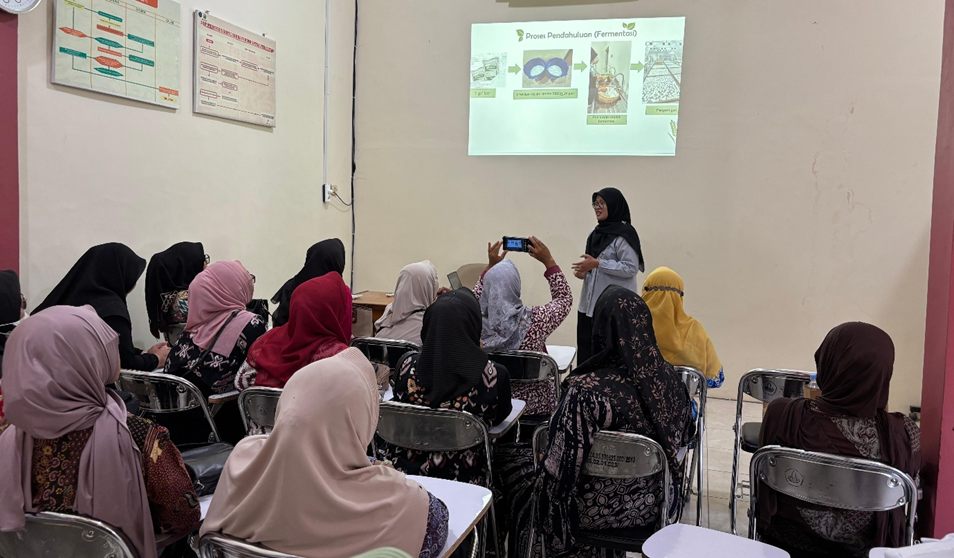
A total of 20 TP PKK members participated in education and hands-on training on local food utilization at the NutriLab Kitchen Teaching Factory (TeFa) of the Polije Department of Health in September 2026.
The activity introduced local food processing into flour and various value-added food products. Polije encouraged participants to explore the potential of local food ingredients through more diverse and practical processing methods.
Polije Introduces Local Food Processing
The team began the activity with an educational session on local food potential and the basic principles of processing ingredients into flour. Participants then explored the facilities and equipment at the NutriLab Kitchen TeFa before joining demonstrations and hands-on practice.
Participants learned the stages of flour processing, from ingredient preparation and pre-treatment to drying, milling, and sieving. The team also introduced the use of flour as a raw material for food products and the concept of composite flour made from several local food sources.
After producing the flour, participants practiced making flour-based food products. They prepared and weighed the ingredients, mixed them, processed the dough, and presented the finished products.
Huda Oktafa, head of the community service team, said the activity combined knowledge with practical experience.
“We designed this activity so participants would gain not only knowledge but also direct experience in processing local food. Through the NutriLab Kitchen Teaching Factory, participants can observe and practice the process of turning local food ingredients into flour and food products,” she said.
Teaching Factory Becomes a Collaborative Space
Polije used the NutriLab Kitchen TeFa as both a learning facility and a space for community interaction. The facility allowed participants to directly experience food processing activities.
Participants learned about the relationship between ingredients, equipment, processing methods, and final products. This approach demonstrated how vocational education can address community needs.
The team also distributed educational booklets on processing local food into flour and value-added food products. Participants can use the booklets to review the materials and processing stages after the activity.
Participants Show Improved Knowledge
The team evaluated the results through pre-tests and post-tests. The evaluation measured changes in participants’ knowledge after completing the educational and practical sessions.
The participants’ average knowledge score increased from 69.67 before the activity to 78.67 afterward. A total of 14 out of 20 participants also recorded higher scores.
Mar’atus Sholiha, head of the Curahlele Village TP PKK, said the activity provided participants with a new learning experience.
“We not only received explanations but also saw the equipment and practiced food processing directly. We can apply this knowledge and experience to utilize local food in our families and community,” she said.
Encouraging Local Food Utilization
This empowerment program marks an initial step for Polije to expand local food utilization within the community. The team can continue the assistance by developing product variations and applying the results of the training in the community.
Polije also utilizes vocational learning facilities to strengthen knowledge and technology transfer to the community. Through the NutriLab Kitchen TeFa, Polije creates opportunities for collaboration with the community to develop local food potential.


