Polije Adopts Green Teaching Factory Strategy from UNDIP Vocational School
10 February 2026
Admin
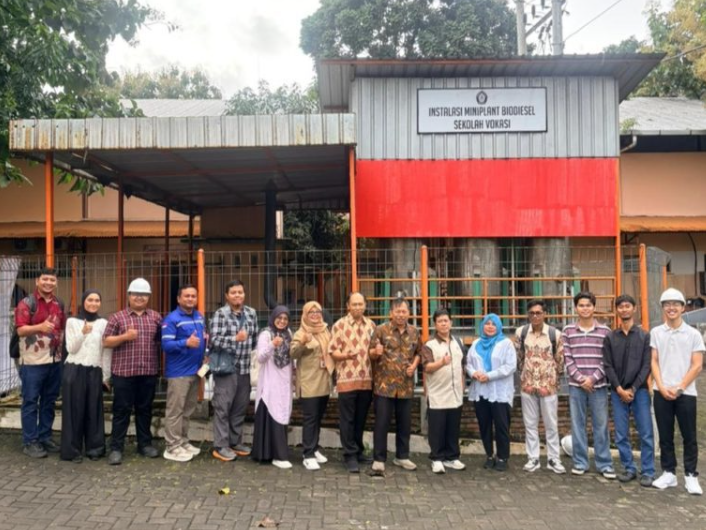
Politeknik Negeri Jember (Polije) is accelerating its vision of becoming a green campus by conducting a strategic benchmarking visit to the Vocational School of Diponegoro University (UNDIP). The visit focused on exploring the sustainable Teaching Factory (TEFA) ecosystem developed by UNDIP’s Industrial Chemical Engineering Technology program, which has become a model for environmentally oriented vocational education.
During the visit, the Polije delegation observed several green innovations implemented at UNDIP. One of the highlights was a student-developed electric vehicle that reflects the institution’s commitment to sustainable technology. The delegation also visited the Pyrolysis Facility, an advanced installation that converts waste into renewable energy and supports the achievement of Sustainable Development Goals (SDGs).
Michael Joko Wibowo, Chairman of Polije’s Advisory Board, described the benchmarking activity as an important milestone in strengthening Polije’s environmental management strategy. He emphasized that the experience gained from UNDIP would contribute significantly to the development of green campus initiatives and sustainable resource management at Polije.
The delegation further examined the operations of several Teaching Factory units, including VOCA Water, the Biodiesel TEFA, and the Integrated Waste Processing Facility (TPST). These facilities demonstrate how vocational education can integrate industrial-scale production, environmental sustainability, and hands-on learning into a single educational ecosystem.
According to the Polije team, UNDIP’s model successfully creates a “real plant” learning environment where students are directly involved in industrial processes. This approach allows learners to gain practical experience while developing solutions to real-world environmental and industrial challenges.
Wendy Triadji Nugroho, Ph.D., Head of the SDGs Team at Polije, also discussed the importance of aligning applied research management with global industry demands. He expressed optimism that Polije could adopt UNDIP’s approach of positioning students as key drivers of innovation through strong research-based vocational education.
Beyond benchmarking, the visit opened opportunities for broader institutional collaboration between the two universities. Both institutions share a commitment to strengthening SDG implementation, enhancing vocational education quality, and fostering innovation that responds to industrial and environmental needs.
The outcomes of the study visit are expected to inspire Polije to replicate similar green technologies and establish environmentally focused industrial laboratories in Jember. By adopting best practices from UNDIP’s green Teaching Factory model, Polije aims to reinforce its position as an adaptive, innovative, and collaborative vocational institution committed to producing graduates who are ready to contribute to a sustainable future.