


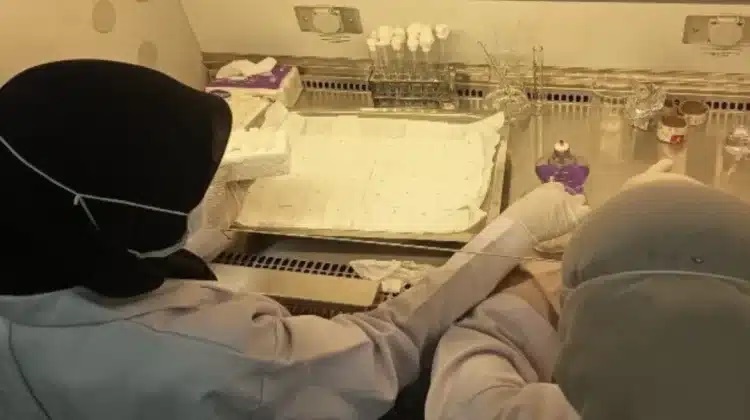
Polije Students Develop Beetle Larva Bacteria to Control Plant Diseases and Pesticide Residues
JEMBER – Five students from Politeknik Negeri Jember (Polije) have developed a potential microorganism-based biocontrol agent. As part of the Student Creativity Program (PKM) Exact Sciences Research team, they isolated bacteria from the larvae of Lepidiota stigma, commonly known as white grubs or beetle larvae.
The innovation aims to control diseases affecting rice and cabbage crops in an environmentally friendly way. The research also seeks to reduce pesticide residue contamination in agricultural soil.
Gallyndra Fatkhu Dinata, S.P., M.P., directly supervised the students throughout the research process. The research team consists of Anas Kamal Satria, Risma Azizatur Rofiqoh, Rizqiyatul Mauluda H., Hanni Syafia Rahmawati, and Naufal Abid Rizqon.
Team leader Anas Kamal Satria explained that the research originated from concerns over declining crop productivity. The team focused on Xanthomonas oryzae, which causes bacterial leaf blight in rice, and Xanthomonas campestris, which causes black rot in cabbage.
“Through this research, we hope to provide an environmentally friendly solution for controlling plant diseases,” said Anas Kamal Satria, leader of the Polije PKM team.
Although white grubs are known as agricultural pests, their larvae contain potentially beneficial bacterial isolates. The cellulolytic bacteria obtained from the larvae produce enzymes and metabolites that can help suppress pathogens and break down chemical residues.
The research team then designed the biocontrol technology to help restore the quality of agricultural soil contaminated by pesticides. The findings could provide farmers with an alternative approach to maintaining healthy agricultural ecosystems.
“We hope the research can support the implementation of more sustainable agricultural practices,” Anas added.
Meanwhile, Polije continues to support student participation in creativity programs and applied research initiatives. Such programs provide opportunities for students to develop innovative ideas and research that can deliver practical benefits to society.


