


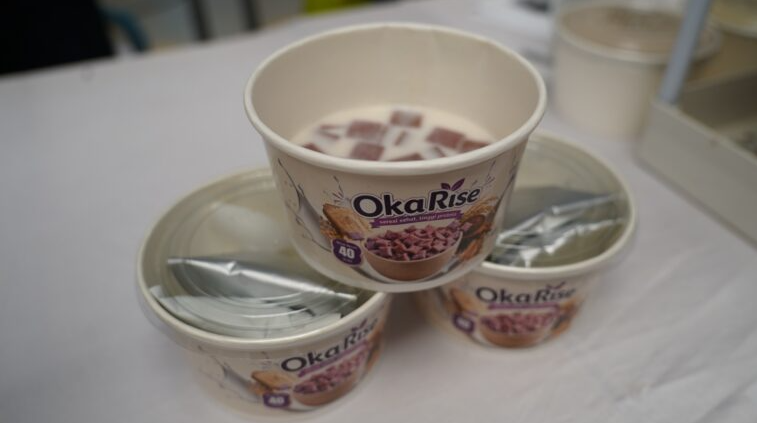
POLIJE Students Develop OkaRise, a High-Protein Gluten-Free Healthy Snack from Food Industry By-Products
Students from the Food Engineering Technology Study Program (TRP), Department of Agricultural Technology, Politeknik Negeri Jember (POLIJE), have introduced an innovative healthy snack called OkaRise, a gluten-free product made from red rice flour and okara flour, a nutrient-rich by-product of the tofu industry. The innovation demonstrates how local resources and food waste can be transformed into nutritious products with significant economic value while supporting sustainable food systems.
The project was initiated by Fariha Imelda Meiliya and five fellow students, who sought to address two pressing challenges: improving community nutrition and reducing food waste. Inspired by the large amount of underutilized tofu residue produced by local industries, the team developed OkaRise as a practical solution aligned with Indonesia's zero-waste movement.
Okara, which is often discarded during tofu production, is naturally rich in plant-based protein, while red rice contributes dietary fiber and beneficial nutrients. By combining these locally available ingredients, the students successfully created a snack that is high in protein, gluten-free, and suitable for health-conscious consumers seeking nutritious alternatives to conventional snacks.
Beyond its nutritional advantages, OkaRise represents an innovative approach to food waste utilization. The product proves that agricultural and food processing by-products can be converted into premium food products with higher commercial value. This approach not only reduces environmental waste but also opens new opportunities for sustainable entrepreneurship within Indonesia's food industry.
The innovation was developed through POLIJE's project-based learning approach, allowing students to integrate scientific knowledge, food processing technology, product development, and business concepts into a single applied research project. Throughout the development process, students gained valuable experience in research, formulation, product testing, and innovation management, preparing them for future careers in the food industry.
The Department of Agricultural Technology has expressed strong appreciation for the students' achievement, recognizing OkaRise as an excellent example of applied vocational education that delivers practical solutions to real-world problems. The university also hopes the product can continue to be refined and eventually reach commercial production, contributing to the development of Indonesia's functional food sector.
OkaRise also supports broader national priorities in sustainable development by promoting circular economy principles, increasing the value of local agricultural resources, and encouraging healthier dietary habits. The innovation illustrates how higher education institutions can contribute to environmental sustainability while strengthening food security and local economic development.
Through OkaRise, POLIJE students have demonstrated that creativity, scientific knowledge, and environmental awareness can generate impactful innovations with tangible social and economic benefits. The project reflects POLIJE's commitment to producing graduates who are not only technically competent but also capable of developing sustainable solutions that address industry challenges, improve public health, and create added value from Indonesia's abundant local resources.


