


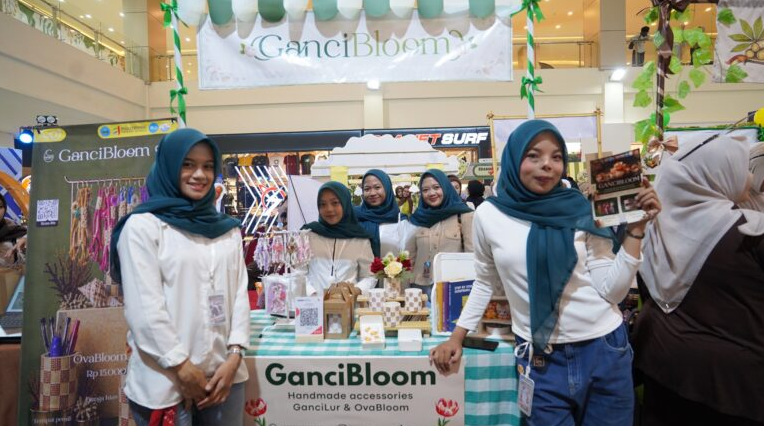
Polije Students Transform Eggshell Waste into Aesthetic Accessories Through “GanciBloom”
Students of Politeknik Negeri Jember (Polije) have developed an innovative eco-friendly product called GanciBloom, a collection of aesthetic accessories made from recycled eggshell waste. The project demonstrates how creativity and sustainability can be combined to transform everyday waste materials into products with economic value while supporting environmental conservation efforts. Through this innovation, the students aim to promote a circular economy and encourage more responsible waste management practices.
GanciBloom was created as part of Polije’s Project-Based Learning (PBL) program, which encourages students to develop practical solutions to real-world challenges. The student team identified eggshell waste as a resource with untapped potential, particularly because large quantities of eggshells are discarded daily by households, restaurants, and food industries. Instead of becoming waste, these materials were processed into attractive decorative accessories.
The innovation process begins with the collection and cleaning of eggshells before they undergo drying and treatment procedures. The shells are then carefully crushed, shaped, and combined with other materials to create unique decorative patterns. Through this process, the students successfully transformed a commonly overlooked waste product into aesthetically appealing accessories suitable for everyday use.
One of the main products developed under the GanciBloom brand is decorative keychains featuring floral-inspired designs. The combination of natural eggshell textures and creative artistic elements gives each accessory a distinctive appearance. As a result, every product offers both artistic value and an environmental message that promotes sustainable consumption.
Beyond creating attractive accessories, the project highlights the importance of waste valorization. By converting eggshell waste into marketable products, the students demonstrate how simple innovations can reduce environmental burdens while generating additional economic opportunities. The initiative supports broader efforts to minimize waste and maximize the utilization of available resources.
The development of GanciBloom also provided students with valuable entrepreneurial experience. They were involved in every stage of the business process, including product design, material sourcing, production, branding, packaging, and marketing. This hands-on experience enabled them to strengthen their business management and innovation skills while exploring the commercial potential of sustainable products.
According to the project team, GanciBloom was designed not only as a business venture but also as a campaign to raise public awareness about environmental sustainability. By showcasing the potential of recycled materials, the students hope to inspire communities to view waste as a resource that can be transformed into useful and valuable products.
The success of GanciBloom reflects Polije’s commitment to fostering innovation, entrepreneurship, and environmental responsibility among its students. Through creative initiatives such as this, the institution continues to encourage young innovators to develop sustainable solutions that contribute to economic development while supporting a greener and more circular economy for the future.


