


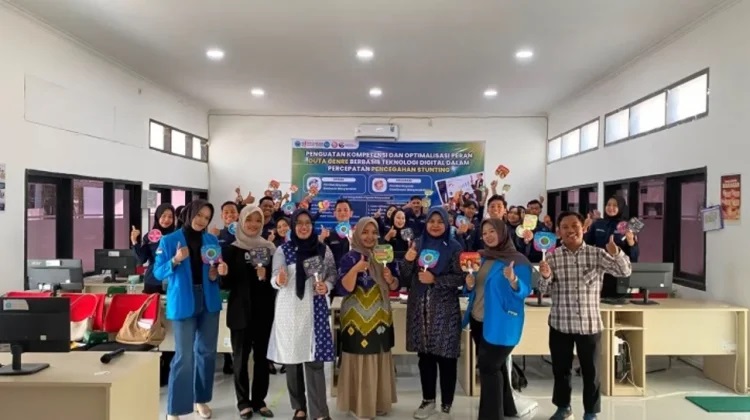
Polije Team Empowers Ngawi GenRe Ambassadors to Prevent Stunting Through Digital Innovation
NGAWI – A community service team from Politeknik Negeri Jember (Polije) Campus 5 Ngawi is empowering local youth through digital innovation to support stunting prevention.
The team trained Ngawi GenRe Ambassadors to use digital technology for health education and early nutritional risk detection. The training program received a grant from Indonesia’s Ministry of Higher Education, Science, and Technology (Kemendiktisaintek).
The activities took place at the Computer Laboratory of Polije Campus 5 Ngawi. Participants directly practiced developing a responsive website for the Ngawi GenRe Forum.
They also designed a modern and interactive user interface to improve the platform’s accessibility and usability.
“The website serves as a nutritional screening tool as well as a health education portal for adolescents,” said Ida Nurmawati, Head of the Community Service Team.
The platform is expected to provide wider access to health information regardless of geographical boundaries.
In addition to programming skills, participants learned to create creative digital content, including videos and digital posters. These skills will help GenRe Ambassadors deliver reliable health information to communities in rural areas.
The Polije team also provided training on balanced nutrition and early detection of nutritional risks. This knowledge is essential to prepare adolescents to become reliable peer counselors.
“Participants also learned how to transform raw data into informative visual presentations,” Ida Nurmawati added.
The skill is expected to support strategic decision-making and strengthen community-based health programs.
Sholakhal Abdul Mubarok, Head of the Ngawi GenRe Forum, expressed his appreciation for the initiative led by the Polije academic team. He said the program had prepared GenRe Ambassadors to become frontline advocates for technology-based stunting prevention.
“We hope the results of this community service program will provide sustainable and meaningful benefits for the community,” Sholakhal Abdul Mubarok said.


