


Polije Team Uses Sensory-Magnetic Board to Promote Independent Healthy Snack Choices Among Children with Special Needs

11 September 2026
Admin

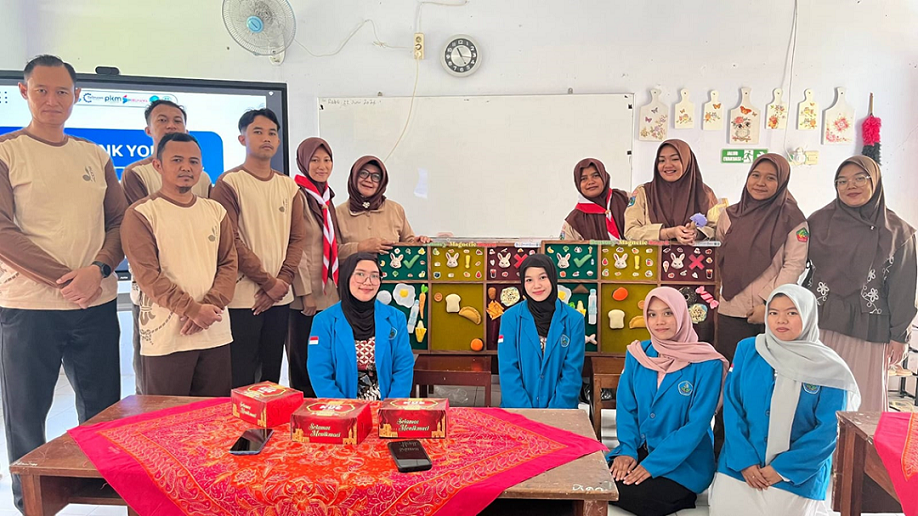
JEMBER – A student team from Politeknik Negeri Jember (Polije) has successfully used an innovative Sensory-Magnetic Board to support nutrition education for children with special needs. The visual-tactile learning board helps students at SLB-C TPA Jember identify and understand healthier snack choices.

Led by Diana Tasya Eza Arifin, the Polije team conducted a mentoring program focused on children with autism and ADHD. The initiative aims to promote healthier eating habits while developing children’s independence in making snack choices from an early age.

The Polije-developed learning tool combines the Traffic Light Nutrition concept with different textures in each zone. The team implemented the program gradually and systematically from July to September.

At the initial stage, Diana Tasya Eza Arifin assessed the students’ basic knowledge through a pre-test. During the second and third weeks, the Polije team introduced the meanings of the colors and textures used in each zone.

The green zone represents foods that are safe to consume, while yellow indicates foods that should be consumed in moderation. Meanwhile, the red zone identifies snacks considered unhealthy. During the fourth and fifth weeks, students began practicing how to sort food models according to their respective zones.

The intensive mentoring continued until the eleventh week, allowing the 10 students to develop greater independence through play-based learning activities. The Polije team concluded the program with a post-test to evaluate the effectiveness of the nutrition education.

“After implementing the program, we saw that the children were beginning to distinguish between healthy and unhealthy snacks,” said Diana Tasya Eza Arifin.

The Polije mentoring program has contributed to positive changes in the students’ daily eating habits. Children who previously preferred chips and packaged drinks began choosing healthier options such as melon, quail eggs, tofu, and tempeh.

The students also showed strong enthusiasm when independently attaching magnetic food replicas to the sensory board. Diana hopes that this adaptive nutrition education innovation can be expanded to other inclusive schools.

“We hope this program will enable more students to receive education about making healthy snack choices,” Diana said.