


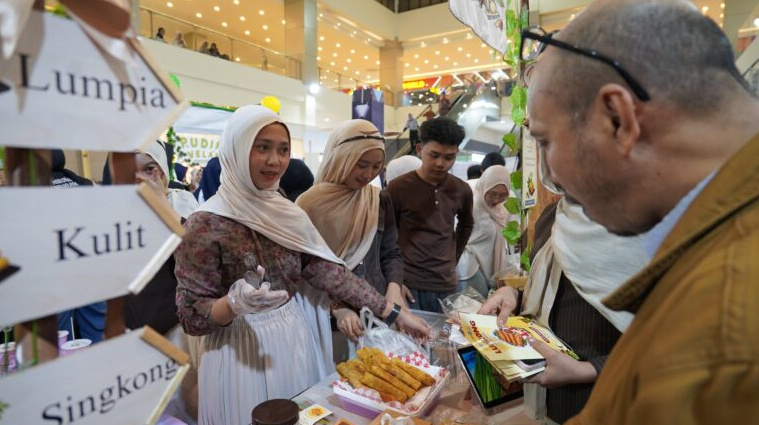
Polije Students Transform Cassava Peel Waste into Innovative Snack Product “LupiKong”
Students of Politeknik Negeri Jember (Polije) have successfully developed an innovative snack product called LupiKong, transforming cassava peel waste into a unique and marketable food product. The initiative demonstrates how agricultural by-products that are often discarded can be converted into value-added products, supporting environmental sustainability while creating new economic opportunities. Through this innovation, the students aim to promote waste utilization and strengthen the implementation of green economy principles.
The project was developed as part of Polije’s Project-Based Learning (PBL) program, which encourages students to identify real-world challenges and create practical solutions through innovation and entrepreneurship. Recognizing the large amount of cassava peel waste generated by food processing industries and households, the student team explored ways to transform this underutilized material into a nutritious and appealing snack.
Cassava peels are commonly treated as waste despite containing valuable nutrients and fiber. Through a carefully designed processing method, the students succeeded in converting the peels into crispy snack products that are safe for consumption and attractive to consumers. The innovation highlights the potential of agricultural waste as an alternative raw material for food production.
The production process involves several stages, including cleaning, processing, seasoning, and packaging. By applying appropriate food processing techniques, the team was able to enhance the flavor, texture, and overall quality of the product while ensuring compliance with food safety standards. The result is a distinctive snack that combines sustainability with consumer appeal.
Beyond its environmental benefits, LupiKong offers promising business potential. The use of low-cost raw materials allows for efficient production while creating additional value from resources that would otherwise be discarded. This business model provides opportunities for small enterprises and local communities to generate income through sustainable food innovation.
The project also serves as a valuable learning experience for the students. Throughout the development process, they gained practical knowledge in product innovation, food technology, business planning, branding, and marketing. These experiences help strengthen entrepreneurial competencies and prepare students for future careers in agribusiness and food industries.
According to the development team, LupiKong was created not only to introduce a new snack product but also to increase public awareness about the importance of waste management and resource efficiency. The students hope their innovation can inspire others to explore creative ways of utilizing agricultural by-products and reducing environmental waste.
The success of LupiKong reflects Polije’s commitment to fostering innovation, sustainability, and entrepreneurship through vocational education. By transforming cassava peel waste into a commercially viable snack product, the students have demonstrated how creative thinking and applied knowledge can contribute to environmental conservation, economic development, and the advancement of a circular economy.


